


How Can a 2-Way Solenoid Valve Control Fluid Flow?
A 2-way Solenoid Valve controls fluid flow by using an electromagnetic coil. This coil actuates a plunger. The plunger then opens or closes an orifice, starting or stopping the media flow. The market for2 Ways Solenoid Valve technology is growing fast. Experts project a 12.4% Compound Annual Growth Rate from 2025 to 2032. This rise comes from more infrastructure projects and automation. A 2 Way Pilot Operated Solenoid Valve often plays a key role. A reputable 2 Way Solenoid Valve Manufacturer helps meet demand for these solutions. Many systems need a 2 Way Solenoid Valve Quick Response. Also, a 2 Way Solenoid Valve CE Certified model ensures quality.
Key Takeaways
- A 2-way solenoid valve controls fluid flow. It uses an electric coil to move a part called a plunger. This plunger opens or closes a small hole to start or stop the flow.
- These valves come in two types. Normally Closed Valves stay shut without power. Normally open valves stay open without power. Engineers choose the type based on what the system needs.
- Key parts of the valve include the coil, valve body, plunger, and seals. The seal material is very important. It stops leaks and must match the fluid and temperature.
- 2-way solenoid valves offer many benefits. They control flow precisely. They shut off completely to prevent leaks. They also respond very quickly and last a long time.
- These valves are used in many places. They help in factories, air conditioning systems, and watering plants. Medical devices like ventilators also use them to control fluids and gases.
The Core Mechanism of a 2-Way Solenoid Valve
A 2-way solenoid valve works through a clever interplay of electricity and mechanics. It precisely manages fluid flow. Understanding its core mechanism helps you see why it is so effective.
Electromagnetic Coil Activation
The process begins with the electromagnetic coil. This coil is the heart of the valve's electrical system. It usually consists of tightly wound copper wire. When electricity flows through this copper wire, it creates a magnetic field. This magnetic field is crucial. It provides the force needed to move the valve's internal parts. This movement then controls the fluid flow.
Plunger Movement and Orifice Control
The magnetic field pulls a metal rod, which we call a plunger. This plunger moves against a spring. It either opens or closes a small hole, known as an orifice. The size of this orifice is very important. It directly affects how much fluid can pass through the valve. For example, a larger orifice allows for higher flow rates. A smaller orifice restricts or meters the flow. You can compare this to a garden hose nozzle. A narrow nozzle limits water flow. An open hose end lets water flow freely. In solenoid valves, the orifice is the passage the plunger seals. Solenoid valves often feature small orifices. This is because the magnetic force needed to open the valve must overcome fluid pressure. Smaller orifices demand less force. This allows manufacturers to use more compact solenoids.
- Flow Rate: Larger orifices mean faster flow. Smaller ones slow it down.
- Pressure Drop: A bigger orifice generally leads to less pressure loss. A smaller one increases it.
- Fluid Velocity: Orifice size directly changes how fast the fluid moves.
Normally Open vs. Normally Closed Configurations
A 2 Ways Solenoid Valve comes in two main configurations. These are normally closed (NC) and normally open (NO). A normally closed valve stays shut when no power is on. It opens only when electricity activates the coil. This is the most common type for many applications. A normally open valve does the opposite. It stays open when there is no power. It closes when electricity activates the coil. Engineers choose the right type based on what the system needs to do if the power fails.
Key Components of a 2-Way Solenoid Valve
A 2-way solenoid valve relies on several key parts working together. Each component plays a vital role in controlling fluid flow. Understanding these parts helps you see how the valve operates.
Solenoid Coil
The solenoid coil is the electrical heart of the valve. It is typically a wire wound around a core. When electricity flows through this coil, it creates a magnetic field. This field provides the power to move the valve's internal parts. Different coils have varying power needs.
| Coil Type | Bore Size | Width | Power Consumption (Watts) | Typical Application |
|---|---|---|---|---|
| Standard DIN 43650B IP65 | 8/11mm | 22mm | 1 to 7 | Small Miniature solenoid valves (pneumatics) |
| Standard DIN 43650A IP65 | 14.6mm | 30mm | 1 to 15 | General purpose solenoid valves |
| Standard DIN 43650A IP65 | 14.6mm | 36mm | 15 to 18.5 | General purpose solenoid valves |
| Typical Italian Standard DIN 43650A IP65 | 13.5mm | 30mm | 8 to 10 | Small Miniature solenoid valves (pneumatics) |
| Typical Italian High Power DIN 43650A IP65 | 13.5mm | 36mm | 14 to 20 | Small Miniature solenoid valves (pneumatics) |
| Typical Italian Very High Power DIN 43650A IP65 | 13.5 to 16.0mm | 37.5mm | 26+ | Large solenoid valves (hydraulics) |
| ATEX encapsulated EExmIIT4 IP65 | 8/11mm | 22mm | 3.8 to 5.1 | Small Miniature solenoid valves (pneumatics) |
| ATEX encapsulated EExmIIT4 IP65 | 10/14.6mm | 36mm | 8.5 to 10.1 | Standard hazardous area solenoid valves (Oil & Gas, Food) |
| Typical American or Asian IP54 | 8 to 16.0mm | Various | 8 to 26 | Large imported non-European solenoid valves |
This table shows how power consumption varies based on coil type and application.
Valve Body and Orifice
The valve body forms the main housing of the 2 Ways Solenoid Valve. It contains all the internal parts. The body also has the inlet and outlet ports for the fluid. Inside the body is the orifice. This small opening controls the fluid path. The material of the valve body is very important. Manufacturers often use Stainless Steel 304 for valve bodies. This material offers many benefits:
- Corrosion Resistance: Stainless steel resists rust and damage from harsh chemicals. It works well in tough places like deserts or offshore. It also handles high temperatures and pressure changes.
- Temperature Resistance: It performs well in both very hot and very cold conditions.
- Versatility: Stainless steel valves fit many uses, including chemical plants and wastewater treatment.
- Hygienic Properties: Industries like food processing prefer stainless steel. It is easy to clean and sterilize, which prevents contamination.
- Cost-Effectiveness and Durability: Stainless steel lasts a long time. This means less maintenance and fewer replacements. It saves money over time.
Plunger and Spring
The plunger is a metal rod inside the valve. The magnetic field from the coil pulls this plunger. This movement opens or closes the orifice. A spring works with the plunger. It pushes the plunger back to its original position when the coil is not energized. This ensures the valve returns to its normal state (either open or closed). Stainless steel is a common material for plungers. Manufacturers also use it for other internal parts like springs.
Seal Material
The seal material in a 2-way solenoid valve is very important. It ensures the valve works correctly and prevents leaks. The right material choice depends on the fluid it handles and the operating conditions. Different applications require specific seal types.
You must review each seal's chemical compatibility with the media. This is especially true for plunger seals. Swelling can restrict or prevent fluid flow. Always consult chemical compatibility websites. Then, test selected seal materials in the specific media.
Here are some common seal materials and their uses:
- Nitrile: This material works well for water and air.
- EPR: You find EPR in water and hydrogen gas applications.
- Hydrin: This is ideal for natural gas plunger lift uses.
- Viton: It is compatible with printing inks and hydrocarbons.
- Silicone: This material works well in water and air.
- Perfluoroelastomer (FFKM): This is best for inks in printing or corrosive media. It is also the most expensive.
- PTFE: This suits hot water, steam, and cryogenic applications like liquid carbon dioxide.
- Rulon: People use Rulon in cryogenic applications such as liquid nitrogen.
Consider the advantages and disadvantages of common materials:
- NBR (Nitrile): It resists compression, tearing, and wear well. It works with oil products, solvents, and alcohol up to 80°C. However, it is sensitive to weather and unsuitable for brake fluid.
- FKM (Viton): This offers very good chemical resistance. Its temperature range is -10°C to 120°C. It resists oils, solvents, and acids. But, it performs poorly with hot water and steam.
- EPDM: This material is very suitable for water, steam, ketones, and alcohols. It resists weather and ozone well. Its typical temperature range is -10°C to 130°C. It has poor resistance to oil and grease.
- PTFE (Teflon): It resists almost all fluids. It is hard and suitable for higher pressures and temperatures (-30°C to 180°C). It is not flexible and not for low operating pressures.
This table shows how different materials perform with various media:
| Material | Water | Oil | Gas | Acids |
|---|---|---|---|---|
| Viton | Good | Excellent | Fair | Good |
| PTFE | Excellent | Good | Excellent | Excellent |
| NBR | Fair | Excellent | Fair | Poor |
| EPDM | Excellent | Poor | Good | Fair |
Temperature limitations also guide material selection. FKM seals typically operate from -20°C to 200°C. Specialized FKM grades can even reach 250°C. NBR generally withstands temperatures up to 120°C. This limits its use in very hot places.
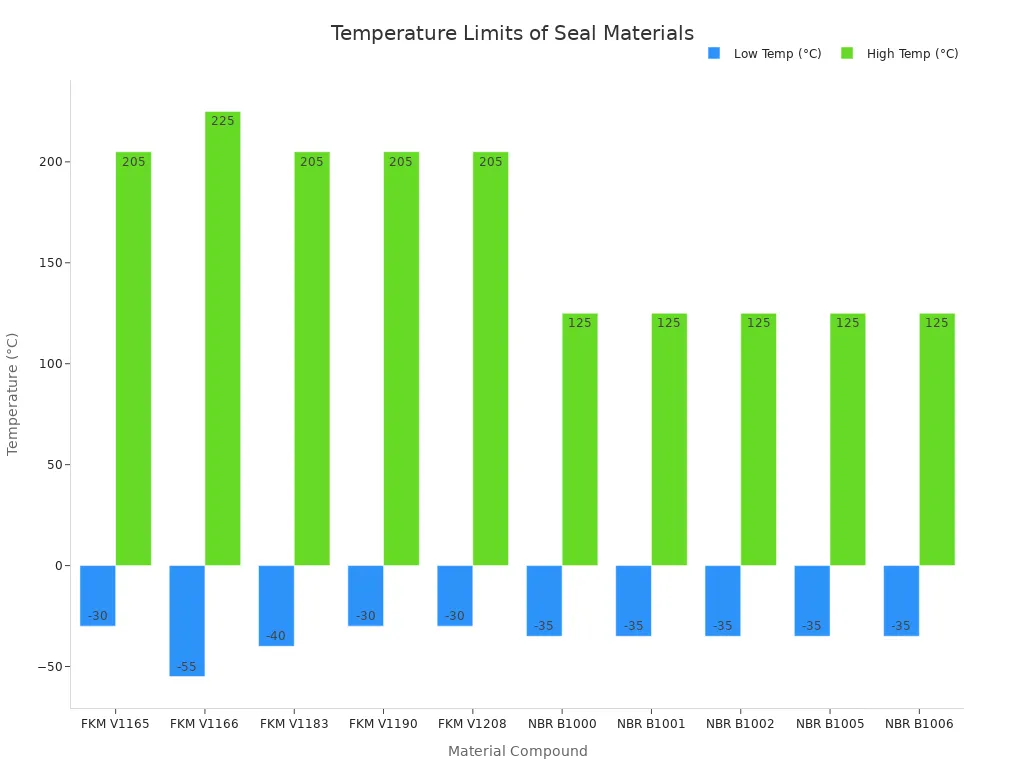
FKM handles high temperatures well. NBR has a more restricted range, usually -30°C to 120°C. This makes FKM better for heat-sensitive applications. Valve design also influences seal choice. Regulatory standards, like those for food production or potable water, set strict material requirements.
Advantages of Using a 2-Way Solenoid Valve
A 2-way solenoid valve offers many benefits. These advantages make it a popular choice in various industries. It helps systems run smoothly and efficiently.
Precise Flow Output
These valves give you excellent control over fluid flow. They can open or close to let a very specific amount of liquid or gas pass through. This precision is vital in many applications. For example, in chemical mixing, you need exact amounts of ingredients. A 2 Ways Solenoid Valve ensures the right volume every time. This prevents waste and keeps processes consistent.
Positive Shut-Off Capability
One major advantage is its ability to provide a "positive shut-off." This means when the valve closes, it completely stops the flow. There are no drips or leaks. This feature is crucial for safety and efficiency. Imagine a system where even a small leak could be dangerous or costly. The valve's tight seal prevents such issues. It gives operators peace of mind.
Rapid Response Time
Speed is often critical in fluid control. 🚀 A 2-way solenoid valve responds very quickly to electrical signals. This fast action allows for immediate changes in fluid flow. For instance, a direct-acting 2-way solenoid valve, like the STC 2P025-1/8 model, has a response time of less than 20 milliseconds. Other direct-acting valves, such as the 2V025 & 2V035 Series, also boast response times under 20ms. This quick reaction time is essential for emergency shut-offs or precise timing in automated systems.
Durability and Reliability
A 2-way solenoid valve offers excellent durability and reliability. This means it works well for a long time without breaking down. Manufacturers design these valves to withstand tough conditions. They use strong materials to ensure a long lifespan. For example, high-quality, corrosion-resistant materials like stainless steel handle wear and tear very well. This is especially true in harsh environments. These materials help the valve last longer.
However, several factors can influence how long a valve lasts and how reliably it performs.
- Contamination: Dirt or debris can block the valve. This causes sticky movement or sealing failures.
- Electrical Failures: Incorrect voltage or coil burnout can lead to unstable operation. Loose or corroded electrical connections also cause problems.
- Mechanical Wear and Tear: Internal parts like the plunger and spring move constantly. Rubber seals also age. This leads to wear and leaks over time.
- Corrosion and Chemical Damage: Harsh chemicals or moisture can damage metal and rubber parts.
- Improper Installation or Operating Conditions: Incorrect voltage, overtightening, or misaligned pipes stress components. This can crack the valve body or cause leaks.
You can also do things to make your valve last longer.
- Quality of Materials: High-quality materials resist wear and tear. This extends the valve's life.
- Operating Conditions: Extreme temperatures or vibrations can damage parts. They reduce how long the valve lasts.
- Frequency of Use: Valves that open and close often wear out faster. Valves used occasionally last longer.
- Maintenance: Regular cleaning and checking electrical connections help. Fixing problems early also makes the valve last longer.
- Proper Selection: Choose a valve that fits your specific fluid, pressure, and temperature needs. This prevents early wear.
- Following Manufacturer's Instructions: Always follow guidelines for installation and maintenance. This ensures the best performance and lifespan.
Understanding these factors helps you choose the right valve. It also helps you maintain it properly. This ensures your system runs smoothly and reliably for many years.
Common Applications for 2-Way Solenoid Valves

2-way solenoid valves are versatile components. They find use in many different industries. Their ability to precisely control fluid flow makes them essential.
Industrial Automation Systems
Industrial automation systems rely heavily on 2-way solenoid valves. They provide fast, hands-free control. These valves manage pneumatic actuators and cylinders on assembly lines. They also enhance media regulation and operational safety in chemical processing. You find them in water treatment and HVAC systems. They control conveyor belts, air systems, and pick-and-place robotics. These valves serve as start and stop points in process control. This includes dispensing, isolation, sequencing, and pressure regulation. They also enhance venting, purging, and pressurizing media. This is especially true with fail-safe designs.
- They control pneumatic actuators and cylinders in manufacturing.
- They enhance media regulation and safety in chemical processing.
- They provide fast, hands-free control for conveyor belts.
- They serve as start and stop points in process control.
- They enhance venting, purging, and pressurizing media.
- You find them in sealing and labeling equipment.
- They are in automated bottling and dispensing systems.
- They regulate airflow in HVAC systems.
- They manage compressed air in water treatment.
- They control gas flow in oil and gas equipment.
In water treatment plants, these valves regulate water or chemical flow. They help with disinfection, coagulation, and filtration. They provide essential on/off control. In industrial systems, they ensure system safety and fluid efficiency. They also provide automated control for consistent operation.
HVAC and Refrigeration
2-way solenoid valves are crucial in HVAC and refrigeration systems. They manage refrigerant flow. For example, a 2-way solenoid valve goes in the liquid line before the expansion valve. This helps with automatic pump-down of refrigerant systems.
- The thermostat signals a temperature rise. The solenoid valve gets power and opens. This lets refrigerant flow to the expansion valve.
- Refrigerant enters the evaporator. This increases pressure. It activates the controller to start the compressor.
- The thermostat is satisfied. Cooling is no longer needed. Electricity to the solenoid valve cuts off. It then closes.
- The compressor keeps running. It moves refrigerant from the low side to the high side liquid receiver.
- A low-pressure safety switch shuts off the compressor. This happens before suction pressure drops too low. It protects the compressor from damage. A pressure-sensitive controller then cycles the compressor on and off.
In refrigeration units, these valves regulate refrigerant flow. They open when the system is active. This allows refrigerant flow. They close when the system is idle. This prevents liquid hammer and protects the compressor. In air conditioning units, these valves manage the defrost cycle in heat pumps. When powered, the valve switches the heat pump to cooling mode. The outdoor coil becomes cold and frosty. When power is off, the system returns to heating mode. This allows the outdoor coil to warm up and defrost.
Irrigation Systems
2-way solenoid valves are vital for modern irrigation systems. They offer many benefits, especially in drip irrigation.
- Precise Water Control: These valves precisely control water flow and timing. They prevent overwatering or underwatering. They activate irrigation zones independently. This reduces water waste.
- Enhanced System Longevity: They regulate water pressure. This prevents wear on sprinklers, pipes, and fittings. It reduces pressure-related damage. This means fewer repairs and lower maintenance costs.
- Automation and Reduced Human Error: Integrating these valves into automated systems allows scheduled operation. They make real-time adjustments based on sensors. This reduces human error. It ensures consistent and efficient operation.
- Energy Efficiency: They provide better control over water flow and timing. This helps save energy. They reduce pump energy consumption. This minimizes water loss and operational costs.
- Minimizing Water Runoff: They regulate water flow to match soil absorption rates. This prevents water from being applied too quickly. It reduces runoff and conserves water. It also helps preserve soil health.
- Cost-Effectiveness: These valves offer long-term savings. They improve water conservation. They reduce energy consumption and maintenance costs. They provide a strong return on investment.
Medical Devices
Two-way solenoid valves play a critical role in the medical field. They ensure the safe and precise delivery of vital services. Medical and home health equipment often use made-to-order two-way and three-way solenoid valves. These valves are essential in many medical and dental devices. They also appear in home healthcare equipment. They control the flow of fluids or gases with great accuracy.
Many different medical devices rely on these valves. For example, ventilators use them to control the flow of oxygen and other gases to patients. Anesthesia machines regulate the flow of anesthesia gases for precise delivery during surgery. Blood analyzers direct blood samples to different compartments for testing. Laboratory equipment also uses these valves in chromatography systems, liquid handling systems, and sample analyzers.
Consider other important applications:
- Oxygen concentrators control oxygen flow to patients with breathing problems.
- Dental equipment manages the flow of water, air, and other fluids in dental chairs and drills.
- Blood pressure monitors control airflow and regulate pressure during measurement.
- Hemodialysis machines control the flow of blood and dialysate for blood purification.
- Hospital beds and chairs use them to control height, backrest, leg elevation, and other positions. They also manage CPR release and locking mechanisms.
- Sterilizers and autoclaves control the flow of fluids and gases during sterilization.
- Infusion pumps regulate the flow rate of liquid medications or hydration fluids.
- Insulin pumps control insulin delivery in wearable devices.
These examples show how crucial 2-way solenoid valves are. They help medical devices work reliably and safely. This ensures patients receive the best care.
2-way solenoid valves are fundamental for precise and reliable fluid flow control. They serve diverse applications. Their electromagnetic operation enables quick, efficient management of media flow. Understanding their mechanism and benefits is crucial. This knowledge helps engineers design and operate systems effectively. These valves are truly essential components in modern fluid dynamics.
FAQ
What is the main function of a 2-way solenoid valve?
A 2-way solenoid valve controls fluid flow. It uses an electromagnetic coil. This coil moves a plunger. The plunger opens or closes an orifice. This action starts or stops the flow of liquid or gas.
What is the difference between normally open and normally closed valves?
A normally closed valve stays shut without power. It opens when electricity activates it. A normally open valve stays open without power. It closes when electricity activates it. Engineers choose based on system needs.
Why is seal material important in a solenoid valve?
The seal material prevents leaks. It ensures the valve works correctly. Different fluids and temperatures need specific seal types. Choosing the right material ensures durability and prevents contamination.
What are some common applications for these valves?
These valves work in many places. They are in industrial automation, like assembly lines. You find them in HVAC and refrigeration systems. They also control water in irrigation. Medical devices, such as ventilators, use them too.