


How Do Stainless Steel Solenoid Valves Perform Under Pressure?
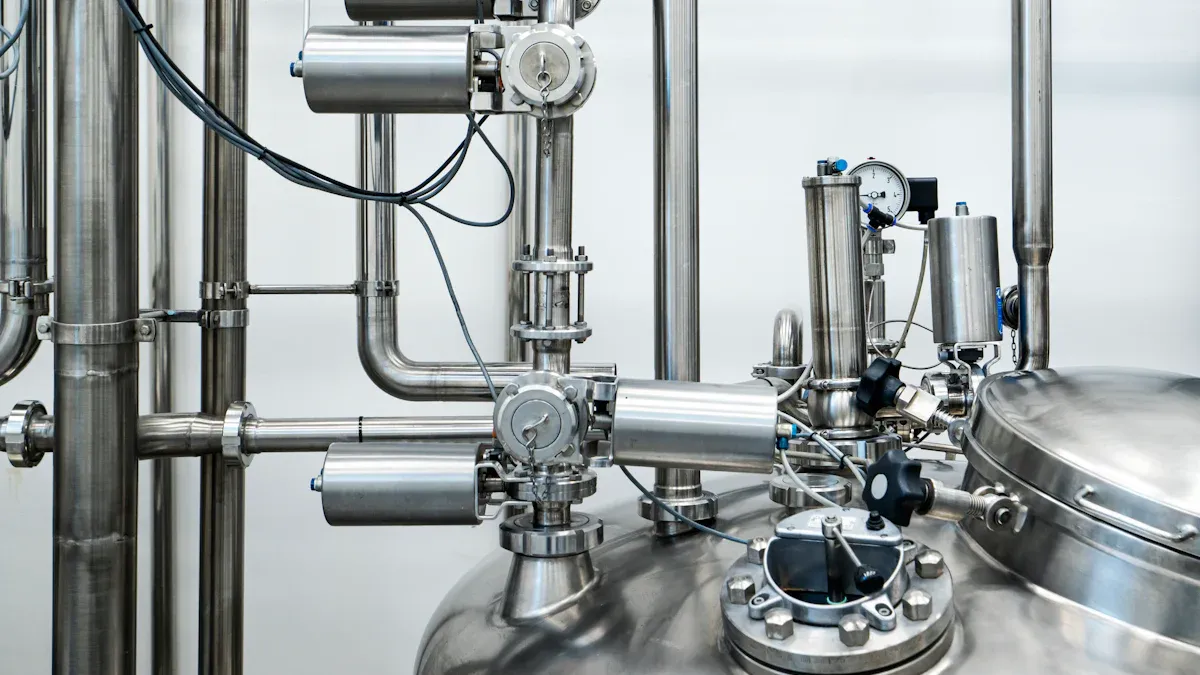
Stainless steel solenoid valve models are crucial for high-pressure systems. Their inherent material strength and robust design allow them to withstand extreme conditions. A 2 Ways Solenoid Valve constructed from 316 Stainless Steel Solenoid Valve material offers superior corrosion resistance. This makes it ideal for demanding industrial applications. Engineers often choose a 2/2 Way Solenoid Valve for critical pressure applications. These valves outperform a Brass Solenoid Valve in harsh environments.
Key Takeaways
- Stainless steel solenoid valves are strong. They work well in high-pressure systems. They resist rust and last a long time.
- Engineers must check a valve's Maximum Operating Pressure (MOP). This is the highest pressure the valve can handle safely. Choosing the right MOP prevents valve failure.
- The liquid a valve controls matters. Different liquids need different stainless steel types and seals. This stops leaks and keeps the system safe.
- Regular checks and cleaning help valves last longer. Look for leaks and clean inside parts. This keeps the valve working well.
- New materials and smart tech make valves better. They can handle more pressure and heat. They also help predict when a valve needs fixing.
Why Stainless Steel Solenoid Valves Excel Under Pressure
Material Strength and Durability
Stainless steel possesses inherent strength. This strength allows it to withstand significant internal and external pressures. It resists deformation or failure under these conditions. This material's robust nature ensures long-term operational integrity in demanding environments. Engineers often choose stainless steel for its exceptional durability. It maintains its structural integrity even with continuous stress.
The fatigue resistance of valve materials is crucial under cyclic pressure loading. While high-performance thermoplastics like Polyetheretherketone (PEEK) offer excellent fatigue resistance, stainless steel provides a different set of advantages. Duplex stainless steels, for example, combine the corrosion resistance of austenitic grades with higher strength. They offer improved resistance to stress corrosion cracking. This makes them highly suitable for high-pressure applications. Advanced materials like duplex stainless steels deliver an excellent combination of corrosion resistance and mechanical strength. This makes them ideal for high-pressure applications in corrosive environments.
Corrosion Resistance in Pressurized Environments
Corrosion resistance is a critical factor in pressurized systems. This is especially true when handling aggressive media. Stainless steel forms a passive layer on its surface. This layer protects the material from corrosive attacks. This self-repairing layer ensures the valve's longevity and reliability.
The corrosion rates of 316L stainless steel vary under different conditions.
| Condition | Immersion Duration | Corrosion Rate (mm/year) |
|---|---|---|
| High Temperature & High Pressure | 10 days | 0.0045 |
| Atmospheric | 10 days | 0.0019 |
| High Temperature & High Pressure | 30 days | 92% higher than atmospheric |
| Atmospheric | 30 days | N/A (baseline for comparison) |
| Under high temperature and high pressure, corrosion rates significantly increase. They can be 91% to 135% higher. The corrosion process also takes longer to reach equilibrium. Increased corrosion under these conditions may result from increasingly porous and weak corrosion products. Fluid stress from stirring also contributes to this. However, Wang et al. found that hydrostatic pressure improved the pitting corrosion resistance of 316L stainless steel in a 3.5% NaCl solution. This shows the complex interaction of pressure and corrosion. |
Temperature Resilience of Stainless Steel Solenoid Valves
Stainless steel maintains its mechanical properties across a wide temperature range. This capability is crucial for consistent performance in varying industrial conditions. The material does not become brittle at low temperatures or lose strength at high temperatures. However, components like seals and coils have specific temperature limitations.
High-Temperature Solenoid Valves, made from stainless steel, can operate within a temperature range of-4 to 350 degrees F. Specific components have their own maximum operating temperatures.
| Component | Maximum Temperature Range |
|---|---|
| PTFE Seals | 0 to 180°C (32 to 356°F) |
| Viton Seals | Up to 130°C |
| Coils (STEAM COIL ONLY) | Up to 130°C |
| Coils (STEAM COIL FITTED) | Up to 180°C |
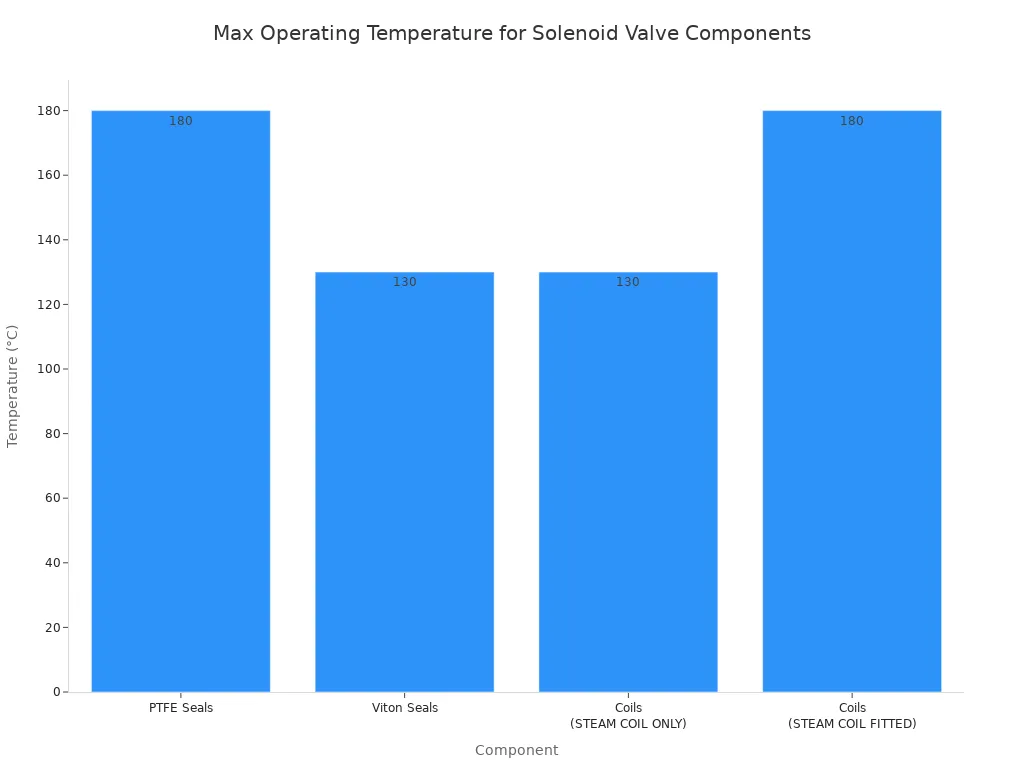
PTFE seals and coils fitted for steam can withstand temperatures up to 180°C. Viton seals and standard coils for steam applications typically handle up to 130°C. These specific component ratings dictate the overall temperature limits for a given stainless steel solenoid valve.
Key Performance Indicators for High-Pressure Stainless Steel Solenoid Valves
Engineers evaluate several key performance indicators when selecting Stainless Steel Solenoid Valves forhigh-pressure applications. These indicators ensure the valve meets specific operational demands and maintains reliability.
Maximum Operating Pressure (MOP) Explained
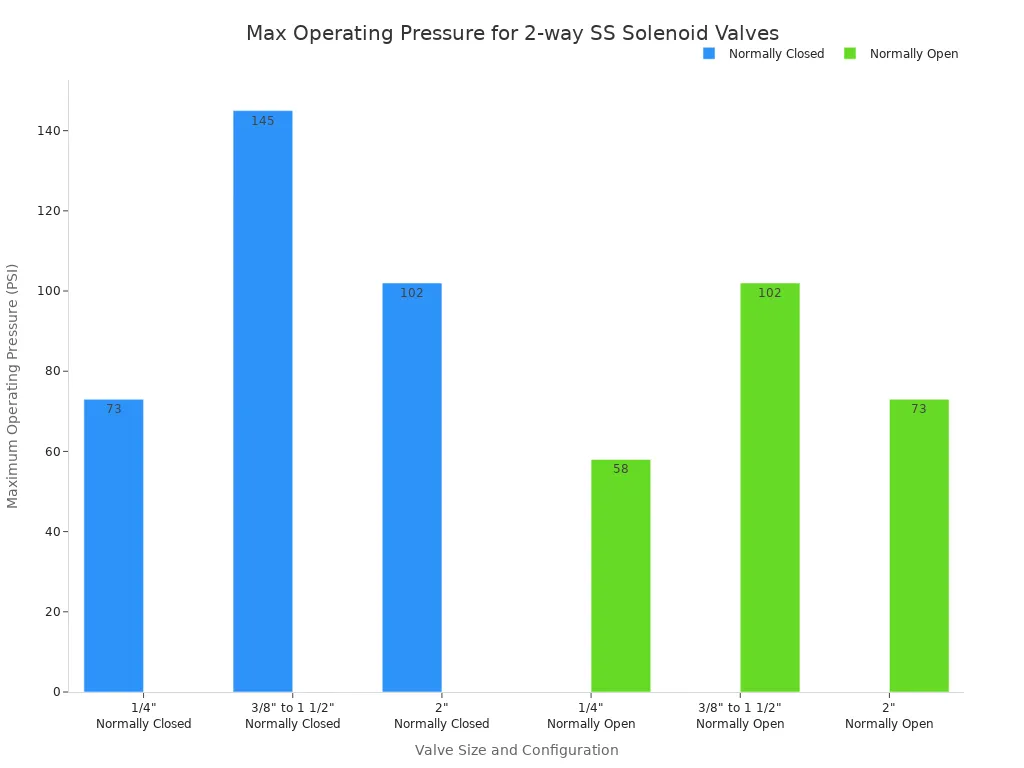
Maximum Operating Pressure (MOP) represents the highest pressure a valve can safely withstand during continuous operation. Exceeding this limit can lead to valve failure or system malfunction. Different valve configurations and sizes have varying MOP ratings. For instance, a 1/4" Normally Closed 2-way stainless steel solenoid valve typically handles 73 PSI. Larger 2-way valves, from 3/8" to 1 1/2", can manage 145 PSI when Normally Closed. Normally Open configurations generally have lower MOPs. A 3-way solenoid valve, such as the Series 310 & 410, offers a typical MOP range of 0-125 PSI. This direct-acting valve performs reliably within its specified pressure limits.
| Valve Type (2-way, Stainless Steel) | Size (inches) | Configuration | Maximum Operating Pressure (PSI) |
|---|---|---|---|
| SV Series | 1/4" | Normally Closed | 73 |
| SV Series | 3/8" to 1 1/2" | Normally Closed | 145 |
| SV Series | 2" | Normally Closed | 102 |
| SV Series | 1/4" | Normally Open | 58 |
| SV Series | 3/8" to 1 1/2" | Normally Open | 102 |
| SV Series | 2" | Normally Open | 73 |
Pressure Differential Handling
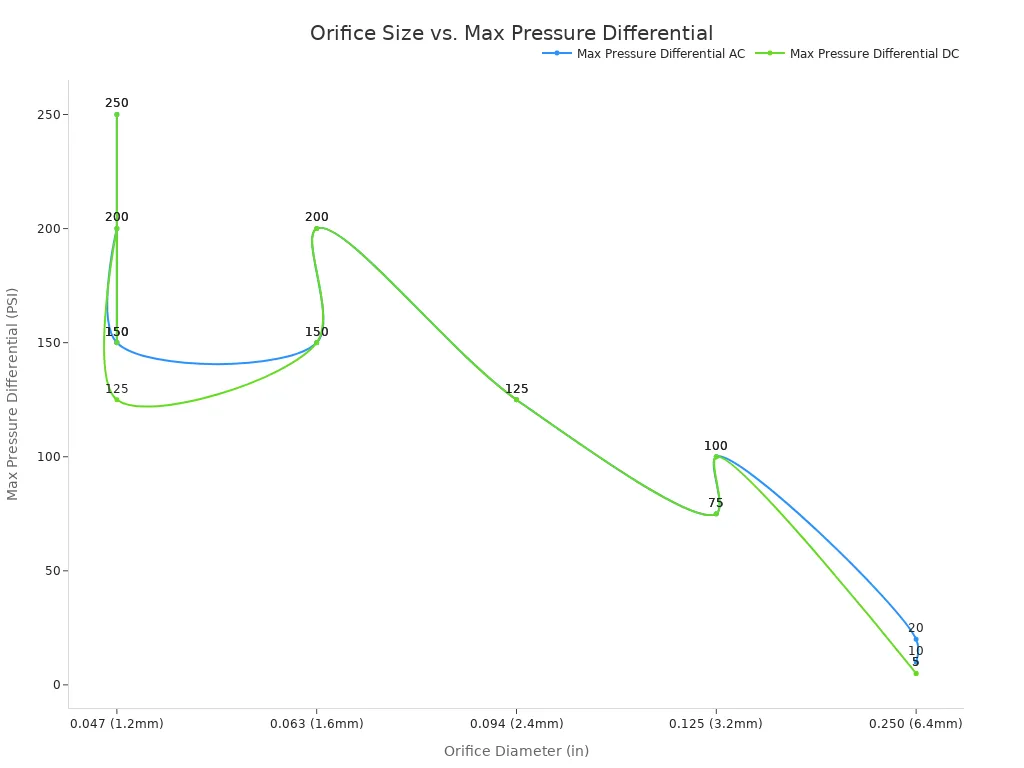
Pressure differential refers to the difference in pressure between the inlet and outlet ports of a valve. A valve's ability to open and close effectively depends on its capacity to manage this differential. Orifice size significantly impacts this capability. A smaller orifice often allows for higher pressure differentials. For example, a 3/8" FPT port stainless steel solenoid valve handles a 0-150 PSI pressure differential. A 1" stainless steel Steam Solenoid Valve with a 25mm orifice manages a0-145 PSI range for AC power.
| Valve Type | Orifice Diameter (in) | Max Pressure Differential AC (PSI) | Max Pressure Differential DC (PSI) |
|---|---|---|---|
| 2-Way Normally Closed | 0.047 (1.2mm) | 250 | 250 |
| 2-Way Normally Closed | 0.250 (6.4mm) | 20 | 5 |
| 3-Way Normally Closed | 0.047 (1.2mm) | 150 | 150 |
| 3-Way Normally Closed | 0.250 (6.4mm) | 10 | 5 |
| 2-Way Normally Open | 0.047 (1.2mm) | 200 | 200 |
| 2-Way Normally Open | 0.094 (2.4mm) | 125 | 125 |
| 3-Way Normally Open | 0.063 (1.6mm) | 150 | 150 |
| 3-Way Normally Open | 0.125 (3.2mm) | 75 | 75 |
| 3-Way Directional Control | 0.063 (1.6mm) | 200 | 200 |
| 3-Way Directional Control | 0.125 (3.2mm) | 100 | 100 |
| 3-Way Multi-Purpose | 0.047 (1.2mm) | 150 | 125 |
Cycle Life and Reliability Under Pressure
Cycle life indicates the number of open/close operations a valve can perform before failure. High-pressure applications demand valves with extended cycle life for continuous, reliable service. Manufacturers engineer high-cycle life models with durable internal components for rapid switching. Yuyao No.4 Instrument Factory, a leading producer, states their valves withstand millions of cycles without performance degradation. This includes their stainless steel options for corrosive environments. Exceeding a valve's specified cycle life under pressure can lead to several common failure modes:
- Mechanical Wear: Moving components like the armature and valve stem degrade over time. This impairs the valve's correct operation.
- Leakage: Seals (O-rings, gaskets) wear out, or the valve seat becomes damaged. This causes leaks. High pressure or temperature also contributes to leakage.
- Temperature and Pressure Extremes: Operating outside specified temperature and pressure ranges causes malfunctions or damage to the valve.
Top Stainless Steel Solenoid Valves for Demanding Industrial Pressure
Selecting the right stainless steel solenoid valve for high-pressure applications requires careful consideration of specific performance characteristics. Several manufacturers offer robust models designed to meet these demanding industrial needs. Engineers often look for valves that combine high-pressure ratings with excellent material compatibility and durability.
Review of High-Pressure Stainless Steel Solenoid Valve A
ASCO Series 316 solenoid valves stand out for their robust construction, particularly when dealing with corrosive media. While the standard body material is brass, ASCO offers a stainless steel body option. This option is especially useful for corrosive environments, particularly in the Zero-minimum differential version. These valves provide a range of flow coefficients (Cv), indicating their flow capacity. They offer flow coefficients from 2.0 Cv to 6.0 Cv and also from 6.0 Cv to 14.0 Cv. This wide range allows for flexibility in various flow requirements. The available information does not specify the exact pressure ratings for the ASCO Series 316 stainless steel solenoid valves. However, their design with stainless steel bodies suggests suitability for demanding conditions where material integrity is paramount.
Review of High-Pressure Stainless Steel Solenoid Valve B
The Parker Series 7000 offers a strong contender for high-pressure applications. A specific model, the 71215SN2MN00N0C111P3, exemplifies the series' capabilities. This 2-Way, Normally Closed Valve features a stainless steel body, ensuring durability and resistance to harsh conditions. It handles a maximum pressure of 200 PSI (AC). The valve has a 1/4 inch NPT port size and a 1/8 inch orifice size. Its flow factor (Cv) is 0.28. The valve operates on 110/50-120/60 VAC with a power consumption of 10 Watts (AC). It tolerates fluid temperatures from 0°F to 185°F. NBR serves as the seal material. This direct-acting valve offers high quality, a modular design, long life, and tight shutoff.
| Feature | Specification |
|---|---|
| Model | 71215SN2MN00N0C111P3 |
| Valve Type | 2-Way, Normally Closed |
| Body Material | Stainless Steel |
| Maximum Pressure | 200 PSI (AC) |
| Port Size | 1/4 inch NPT |
| Orifice Size | 1/8 inch |
| Flow Factor (Cv) | 0.28 |
| Voltage | 110/50-120/60 VAC |
| Power Consumption | 10 Watts (AC) |
| Max Fluid Temp | 185°F |
| Min Fluid Temp | 0°F |
| Seal Material | NBR |
| Actuation Type | Direct Acting |
| Coil Type | 1/2" Conduit, 18" Leads |
| Series | 7000 Series |
| Key Benefits | High Quality, Modular Design, Long Life, Tight Shutoff |
Review of High-Pressure Stainless Steel Solenoid Valve C
Burkert Type 6281 stainless steel solenoid valves are another excellent choice for demanding pressure environments. These valves operate within a pressure differential range of 0.2 to 16 bar. This pressure capability applies across a wide array of port sizes, from G 3/8" up to G 2-1/2".
| Port size (BSP) | Pressure (bar) |
|---|---|
| G 3/8" | 0.2-16 |
| G 1/2" | 0.2-16 |
| G 3/4" | 0.2-16 |
| G 1" | 0.2-16 |
| G 1-1/4" | 0.2-16 |
| G 1-1/2" | 0.2-16 |
| G 2" | 0.2-16 |
| G 2-1/2" | 0.2-16 |
The stainless steel body of the Burkert Type 6281 is compatible with various media. It handles mildly acidic and alkaline solutions, ultra-pure water, and drinking water. This makes it suitable for applications needing high chemical resistance. The valve's seal materials also offer specific compatibilities:
- NBR: This material works well with neutral fluids like compressed air and water.
- EPDM: Engineers choose EPDM for oil and fat-free fluids, hot water, acetone, and aqueous alkali solutions.
- FKM: This seal material is best for hot air and per-solutions.
This range of material and seal options ensures the Burkert Type 6281 can perform reliably in diverse high-pressure and chemically challenging settings.
Selecting the Right Stainless Steel Solenoid Valve for Pressure Applications
Choosing the correct stainless steel solenoid valve for a specific application requires careful evaluation. Engineers must consider pressure demands, media compatibility, and adherence to industry standards. This ensures optimal performance and safety.
Application-Specific Pressure Requirements
Pressure requirements vary significantly across different industrial applications. For hydraulic power units, a stainless steel solenoid valve typically operates within a range from vacuum to 60 PSI. Some options can extend this to 100 PSI. These valves handle air, liquid, oil, water, and vacuum services. In contrast, high-pressure water jet cutting systems demand much higher ratings.
| Valve Type | Pressure Rating |
|---|---|
| DELCO 2 Way High Pressure Solenoid Valve | 250 bar |
| DELCO High Pressure Pilot Diaphragm Solenoid Valve | 0.1 MPa to 50 MPa |
| General Stainless Steel Solenoid Valves in Water Jet Cutting Systems | Often exceeding 10,000 PSI |
Stainless steel solenoid valves in high-pressure water jet cutting systems must be rated to the highest pressure the system can achieve. This ensures all components within the high-pressure plumbing system, including valves, are compatible and can safely withstand the operational pressures.
Media Compatibility for Stainless Steel Solenoid Valves
The fluid being controlled dictates the necessary valve materials. Stainless steel construction offers superior corrosion resistance, strength, and temperature tolerance for demanding applications. Different grades of stainless steel suit various chemical environments, from mildly corrosive to highly aggressive. Industries such as food processing, pharmaceutical, and chemical frequently specify stainless steel solenoid valves due to their strict hygiene and corrosion-resistance needs.
For aggressive chemicals like concentrated sulfuric acid, specific elastomers and seal materials are crucial.
- Viton and Kalrez are generally accepted as the most recommended elastomers for all sulfuric acid applications.
- PTFE (polytetrafluoroethylene) and PFA (perfluoroalkoxy) plastics offer better resistance to sulfuric acid compared to elastomers like Viton.
- Other elastomers that can be used depending on concentration and temperature include EPDM, Neoprene, SBR, Silicone, Butyl, and Hypalon.
| Material | Temperature Range | Key Resistance | Disadvantages/Limitations |
|---|---|---|---|
| FKM (Viton®) | -26°C to +205°C | Excellent to heat, acids, oils, salt solutions, hydrocarbons | Poor resistance to ketones and acetone |
| FF-KM (Perfluoroelastomer) | -40°C to +250°C | Outstanding to nearly all solvents and chemicals | Very high cost, difficult to mold |
| FEP (Fluorinated Ethylene Propylene) | -73°C to +200°C | Chemically inert, very tough, excellent chemical resistance | Poor memory at low temperatures |
| PTFE (Teflon®) | -200°C to +230°C | Exceptional to almost every chemical and extreme temperatures | Not elastic, limited sealing performance |
The choice of valve material is crucial for both functionality and longevity. It depends on the fluid being controlled and operating conditions. Materials must be specified for all major valve components. ASTM International is a common source for material specifications. For corrosive chemicals or acids, PTFE seals and high-grade stainless steel like 316L are typically required. Incorrect identification of the fluid type can lead to premature failure, corrosion, or dangerous leaks.
Certifications and Standards for High-Pressure Use
Industry standards ensure the safety and reliability of high-pressure valves. ASME B16.34, "Valves - Flanged, Threaded, and Welding End," provides broad guidelines for valve design, materials, and testing across various industrial sectors. This standard supports a wide range of materials, from carbon steel to high-performance alloys like Inconel. API 6D specifies materials suitable for high-pressure and high-temperature environments, ensuring durability and compatibility with petroleum and natural gas applications. It references materials such as carbon steel, stainless steel, and other high-performance alloys that can withstand harsh operating conditions.
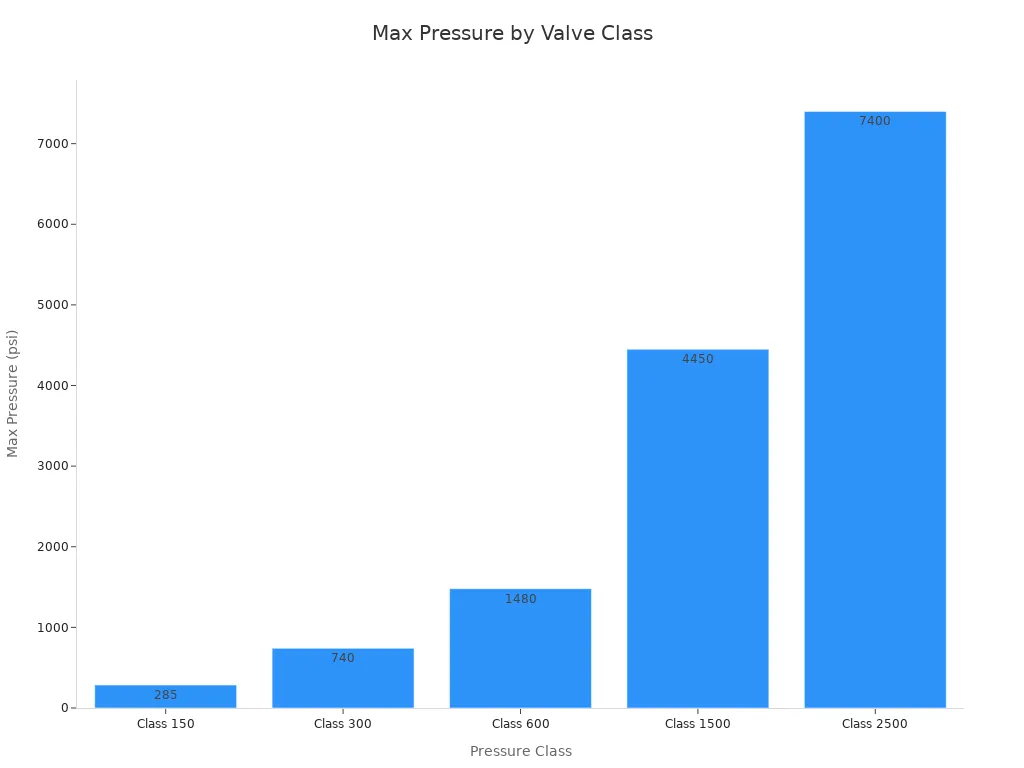
API 6D outlines specific pressure class examples:
- Class 150: Up to 285 psi
- Class 300: Up to 740 psi
- Class 600: Up to 1480 psi
- Class 1500: Up to 4450 psi
- Class 2500: Up to 7400 psi
These are nominal ratings, dependent on temperature and material. Temperature ratings vary by material. Carbon steel typically handles up to 1000°F (537°C). Stainless steel often operates up to 1200°F (649°C). Alloy steel and special alloys can exceed 1200°F.
| Pressure Class | Temperature Rating Range | Max Pressure (at temperature) |
|---|---|---|
| Class 150 | -20°F to 450°F (-28°C to 232°C) | Up to 285 psi (19.6 bar) |
| Class 300 | -20°F to 450°F (-28°C to 232°C) | Up to 740 psi (51 bar) |
| Class 600 | -20°F to 450°F (-28°C to 232°C) | Up to 1480 psi (102 bar) |
| Class 1500 | -20°F to 450°F (-28°C to 232°C) | Up to 4450 psi (307 bar) |
| Class 2500 | -20°F to 450°F (-28°C to 232°C) | Up to 7400 psi (510 bar) |
API 6D mandates rigorous testing protocols. These include hydrostatic shell tests, hydrostatic seat tests, and stem backseat tests. These tests ensure the valve body withstands internal pressures, the seating surface seals effectively, and the valve stem does not leak when fully open. Inspections and certification follow these tests to verify compliance.
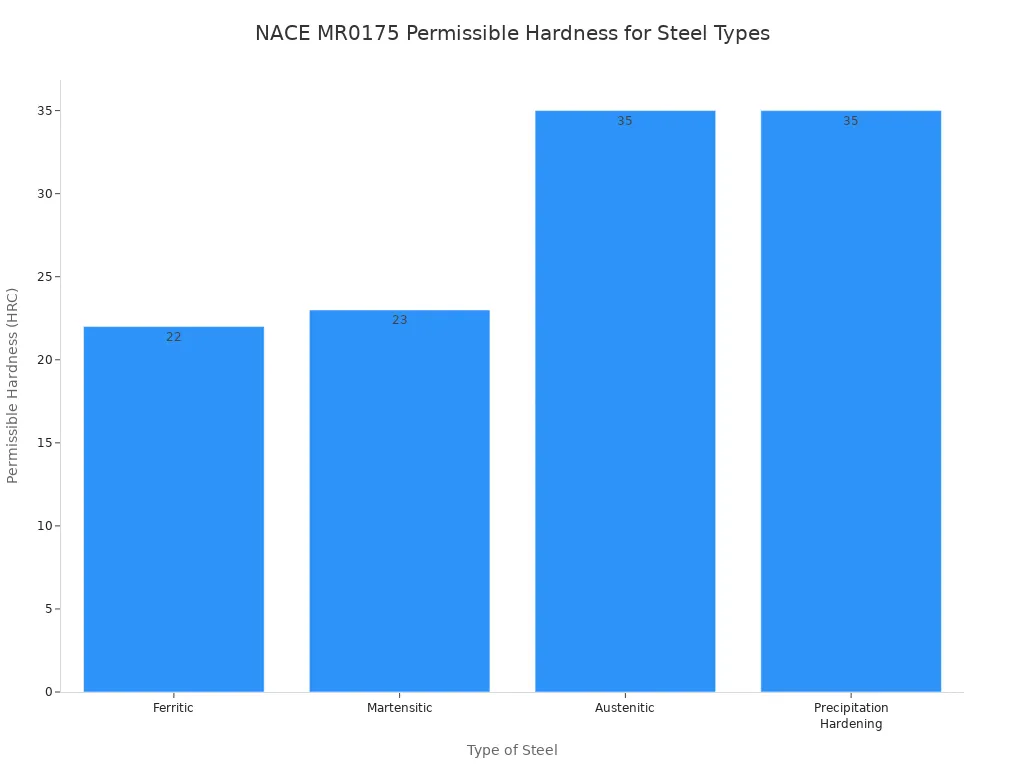
NACE MR0175 addresses materials for sour gas service. It specifies heat treatment requirements to relieve stress and minimize susceptibility to sulfide stress cracking. For carbon steels, allowable heat treatment conditions include hot-rolling, annealing, normalizing, normalizing and tempering, and various quenching and tempering processes. Cold-worked carbon steel materials with outer fiber deformation greater than 5% must undergo stress relief to achieve a hardness below 22 HRC.
| Type of Steel | Permissible Hardness (HRC) |
|---|---|
| Ferritic | ≤ 22 |
| Martensitic | ≤ 23 |
| Austenitic | ≤ 35 |
| Precipitation Hardening | ≤ 35 |
NACE MR0175, particularly after its merger into ISO 15156 in 2003, splits the determination of material acceptability into two functions. Function 1 requires the manufacturer to ensure the valve meets metallurgical and manufacturing requirements for sour service. Function 2 requires the end-user to ensure compatibility based on specific service environment parameters like pH, chlorides, temperature, and H2S partial pressure. For example, 316 SS, compliant under the 2002 edition if annealed, free of cold work, and with hardness less than HRC 22, now only satisfies Function 1. It requires further assessment under Function 2 and qualifies if the service has a chloride concentration below 50 mg/L, an operating temperature below 60°C, and an H2S partial pressure below 100 kPa.
Optimizing Performance of Stainless Steel Solenoid Valves Through Installation and Maintenance
Proper Installation Techniques for Pressure Systems
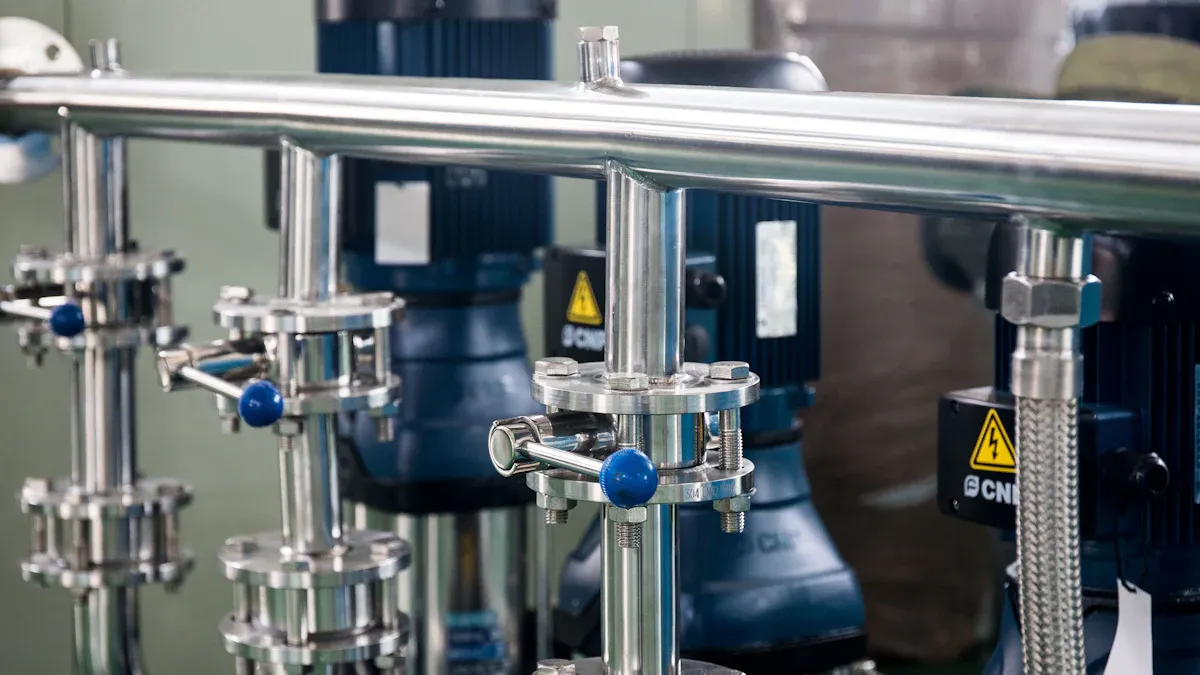
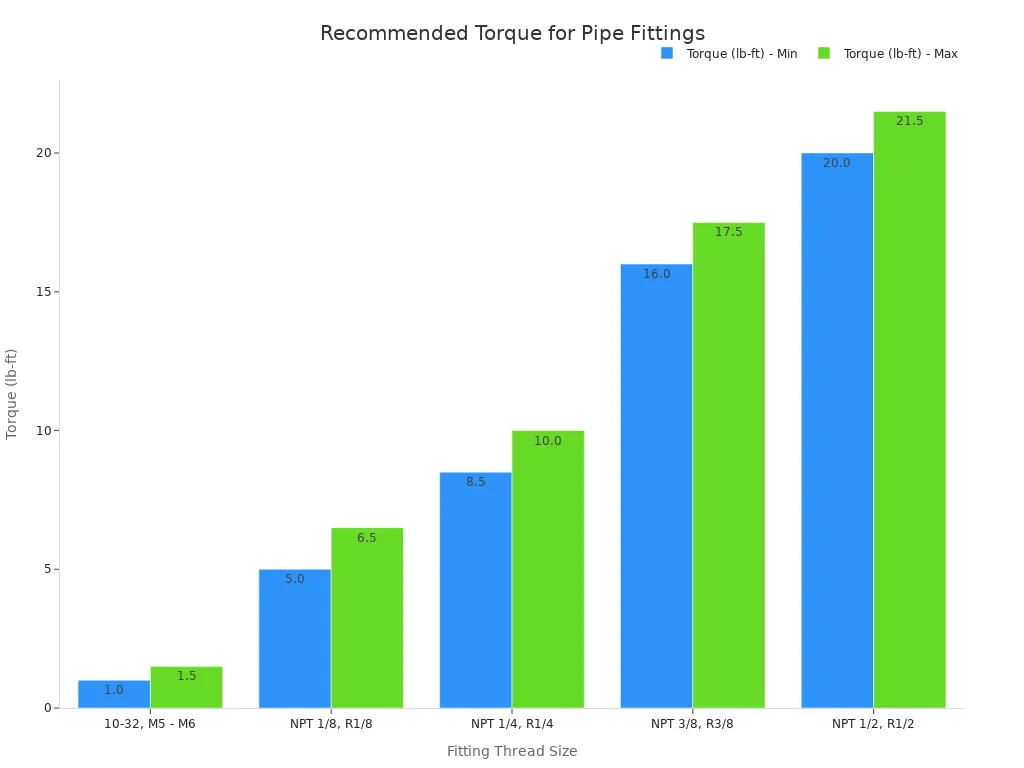
Correct installation is crucial for the reliable operation of solenoid valves in high-pressure systems. Engineers must ensure proper sealing and secure connections. They should tighten pipe fittings by hand first. Then, they turn them 2-3 turns with a wrench. This ensures the fitting reaches the desired torque. If fittings lack pre-coated sealant or the sealant is damaged, apply Teflon sealant tape to the threads. This prevents leaks.
| Fitting Thread Size | Torque, lb-ft | Torque, kgf/cm |
|---|---|---|
| 10-32, M5 - M6 | 1.0 - 1.5 | 14 - 21 |
| NPT 1/8, R1/8 | 5 - 6.5 | 70 - 90 |
| NPT 1/4, R1/4 | 8.5 - 10 | 120 - 140 |
| NPT 3/8, R3/8 | 16 - 17.5 | 220 - 240 |
| NPT 1/2, R1/2 | 20 - 21.5 | 280 - 300 |
Routine Maintenance for High-Pressure Stainless Steel Solenoid Valves
Regular maintenance extends the life and ensures the efficiency of high-pressure solenoid valves. Technicians should inspect valves for external damage or leaks. They must check electrical connections for corrosion or looseness. Cleaning internal components, such as the armature and valve seat, prevents debris buildup. This debris can hinder proper operation. Replacing worn seals and O-rings is also essential. This maintains the valve's pressure integrity.
Troubleshooting Pressure-Related Issues in Solenoid Valves
Operators may encounter pressure-related issues with solenoid valves. Several common problems and their diagnoses exist.
- Low Pressure: Check the inlet and outlet pressure differential. Pressure-assisted valves need a minimum pressure difference (0.3 to 1 bar) to operate. If the difference is too low, replace the valve with a zero-rated or direct-acting type. Alternatively, reduce back pressure.
- Dirt Ingress: Isolate the valve, remove power, and drain the system. Carefully remove the diaphragm or armature assembly. Inspect for dirt or debris.
- Corrosion: Isolate the electrical supply and drain the system. Remove the armature assembly. Check for pitting. Verify media compatibility. Ensure cleaning chemicals are properly diluted.
- Upstream pressure pulse: Check the inlet and outlet pressure differential and flow. Determine if other downstream valves create excessive back pressure.
- Pressure difference inlet/outlet too high: Check the pressure. Reduce inlet pressure or install a pressure reducing valve.
- Differential pressure too high or pulsating pressures in line: Verify the solenoid valve specification meets system requirements. Pressure-assisted valves need a stable minimum pressure difference. If the valve is oversized or incorrectly specified, it may cycle open and close. Check other valves in the installation.
Future Innovations in High-Pressure Stainless Steel Solenoid Valve Technology
The future of high-pressure solenoid valves involves continuous innovation. Manufacturers focus on advanced materials, smart technologies, and enhanced safety features. These developments aim to improve performance, reliability, and efficiency in demanding industrial settings.
Advancements in Material Science for Solenoid Valves
Material science drives significant progress in solenoid valve technology. Engineers develop new alloys for enhanced pressure and corrosion resistance. For example, chrome-nickel-molybdenum austenitic stainless steel, specifically EN 1.4598, is now used for inner sleeves. This material offers high corrosion resistance and improved machinability. It also helps reduce manufacturing costs and prevents corrosion-related failures. Austenitic steel also finds use in valve needles and housing. Sometimes, a Diamond-Like Carbon (DLC) coating improves mechanical properties and overall corrosion resistance. These material advancements ensure valves withstand harsher conditions and last longer.
Smart Integration for Stainless Steel Solenoid Valves
Smart technology transforms solenoid valve capabilities. KTW Smart Valves, for instance, handle a wide range of temperatures, from -200°C to +400°C. They also accommodate pressure differences between 0.5 bar and 1,000 bar. These valves are made of stainless steel, making them suitable for aggressive media and preventing corrosion. IoT integration allows real-time monitoring of performance metrics. These metrics include flow rate, temperature, and pressure. Sensors alert users to potential failures before these failures occur, enabling predictive maintenance. This reduces downtime and improves operational efficiency.
Enhanced Safety Features in Pressure Applications
Integrated diagnostic capabilities significantly improve safety and operational efficiency. By collecting real-time data, manufacturers gain valuable insights into valve operation. They identify potential issues before these issues lead to failures or downtime. Data analytics and machine learning algorithms process vast amounts of data from smart sensors. These technologies identify patterns and trends. This enables predictive maintenance strategies. Valve maintenance can then be scheduled based on actual performance data rather than fixed intervals. This reduces unnecessary downtime and extends valve lifespan. Festo's Motion Terminal VTEM, for example, combines many functions into one software-controlled unit. It uses integrated sensors for precise control and advanced diagnostics. Bosch's smart valves also feature self-diagnostic capabilities. These capabilities enable predictive maintenance and reduce downtime in industrial applications.
Engineers design stainless steel solenoid valves for reliable, safe operation under significant pressure. They offer superior durability and resist harsh industrial conditions. Selecting the appropriate valve requires careful consideration of pressure ratings, material properties, and application-specific demands. This ensures optimal performance and longevity. Their robust construction and advanced features make them critical components. They maintain efficiency and safety in high-pressure industrial systems.
FAQ
Why do engineers prefer stainless steel for high-pressure solenoid valves?
Engineers prefer stainless steel due to its superior material strength and durability. It resists deformation under high pressure. Its corrosion resistance protects against aggressive media. This ensures reliable, long-term operation in demanding industrial environments.
What does Maximum Operating Pressure (MOP) signify for a solenoid valve?
MOP represents the highest pressure a valve can safely withstand during continuous operation. Exceeding this limit causes valve failure. Engineers must select valves with MOP ratings suitable for their specific system demands.
How does media compatibility impact stainless steel solenoid valve selection?
The fluid being controlled dictates the necessary valve materials. Stainless steel grades and seal materials must resist corrosion from the media. Incorrect material selection leads to premature failure, leaks, or safety hazards.
What routine maintenance do high-pressure stainless steel solenoid valves require?
Routine maintenance includes inspecting for leaks and external damage. Technicians check electrical connections. They clean internal components and replace worn seals. This ensures optimal performance and extends the valve's operational life.
Can temperature affect the performance of stainless steel solenoid valves under pressure?
Yes, temperature affects performance. Stainless steel maintains its mechanical properties across a wide range. However, seals and coils have specific temperature limits. Exceeding these limits can compromise valve integrity and function.