


When Should You Use a 2-Way Solenoid Valve?

A 2 Way Solenoid Valve is the optimal choice for straightforward on/off control of fluid flow in a single line. Its simplicity and efficiency make it ideal for basic flow management tasks. This valve type excels in applications requiring a clear "open" or "closed" state without diversion or mixing. In 2023, the 2/2 Solenoid Valve segment held a revenue share of 42.93%in the overall Solenoid Valve market, highlighting its significant role. The2 Way Solenoid Valve market is projected to grow at a Compound Annual Growth Rate (CAGR) of 12.4% from 2025 to 2032. This growth comes from more infrastructure investment, a greater focus on automation, and a push for sustainability. For example, a 2 Way Direct Acting Solenoid Valve provides precise control in many systems. A 2 Way Water Solenoid Valve is common in irrigation. When dealing with harsh chemicals, a 2 Way Solenoid Valve Anti-Corrosion ensures longevity. This type offers reliable performance across various demanding environments.
Key Takeaways
- A 2-way solenoid valve is best for simple on/off control of fluid in one line. It either lets fluid flow or stops it completely.
- These valves are simple to use, reliable, and cost less for basic control tasks. They also save energy in systems that are mostly on or off.
- 2-way valves work well in many places, like watering systems, basic fluid transfer, and dispensing liquids. They are also good for vacuum control.
- Choose a 2-way valve when you need to fully stop fluid or when space and budget are limited. It is not for mixing or diverting fluids.
- When picking a valve, check what fluid it will carry, its pressure and temperature limits, and its electrical needs. Also, make sure the materials are strong enough.
Understanding the Core Function of a 2-Way Solenoid Valve
Basic Design and Operation
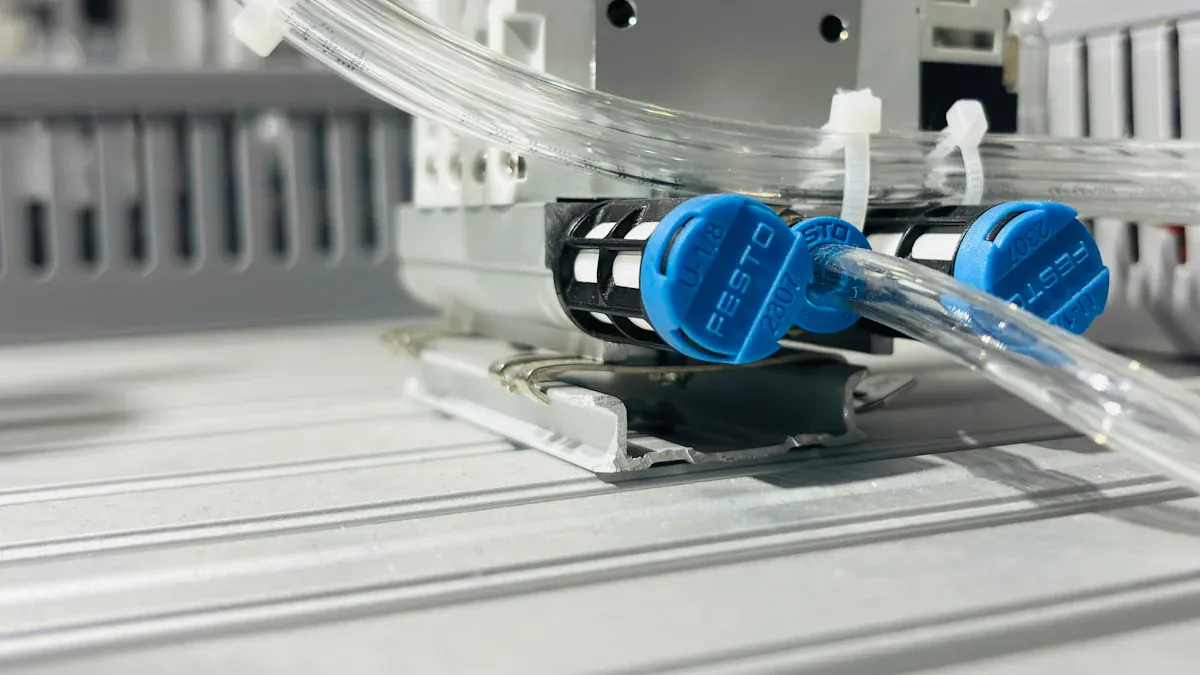
A 2-Way Solenoid Valve works by controlling fluid flow through a simple mechanism. It has several key parts that work together. The valve body holds all the internal components and creates a path for the fluid. Fluid enters through the inlet port and leaves through the outlet port. Inside, a small opening called an orifice connects these two ports, managing the flow. An electromagnetic coil is a crucial part. This coil is a tightly wound copper wire. When electricity flows through it, the coil creates a magnetic field. This magnetic field moves a plunger or armature. The plunger then controls the flow. A spring pushes the plunger back to its original spot when the electricity turns off. An armature tube guides the plunger and spring. Electric terminals or lead wires connect the valve to a power source. Finally, diaphragms or seals create a tight, leak-proof barrier. They open or close the fluid path at the orifice.
Normally Open vs. Normally Closed Configurations
2-Way Solenoid Valves come in two main types based on their default state: normally open (NO) and normally closed (NC). A normally closed valve stays closed when it has no power. It only opens when the solenoid coil gets electricity. This means fluid cannot flow until the valve is energized. On the other hand, a normally open valve stays open when it has no power. Fluid flows freely through it. This valve closes only when the solenoid coil receives electricity. Choosing between NO and NC depends on what the system needs to do if power fails.
Direct-Acting vs. Pilot-Operated 2-Way Solenoid Valves
You will find two main ways a 2-Way Solenoid Valve operates: direct-acting and pilot-operated. Direct-acting valves are simple. The electromagnetic coil directly lifts the plunger to open or close the orifice. These valves work well for small flow rates and low pressures. They respond quickly to electrical signals. Pilot-operated valves use the system's fluid pressure to help them open or close. The solenoid coil first opens a small pilot orifice. This changes the pressure balance inside the valve. The pressure difference then moves a larger diaphragm or piston, which controls the main flow. Pilot-operated valves can handle higher flow rates and pressures. They often need a minimum pressure difference to work correctly.
Key Advantages of Choosing a 2-Way Solenoid Valve
Simplicity and Reliability in Operation
A 2-Way Solenoid Valve offers straightforward operation. Its design is simple, featuring fewer moving parts compared to more complex valve types. This simplicity directly leads to high reliability. When a device has fewer components, there are fewer things that can break down. This means the valve works consistently for longer periods. Operators can also find these valves easy to maintain. Their basic structure makes troubleshooting and repairs less complicated, saving time and effort.
Cost-Effectiveness for Basic Control
Choosing a 2-Way Solenoid Valve often makes good financial sense. These valves typically have a lower purchase price than multi-port alternatives. Their simple design also means installation costs are usually lower. You do not need complex piping or control systems for basic on/off functions. Over time, the reduced need for maintenance further contributes to overall cost savings. For applications that only require starting or stopping fluid flow, this valve provides an economical solution.
Energy Efficiency in On/Off Applications
Many systems aim to save energy, and a 2-Way Solenoid Valve helps achieve this goal. These valves are particularly efficient in applications where they spend most of their time in one state (either open or closed). For example, a Normally Closed Valve only uses power when it needs to open and stay open. When it is closed, it consumes no energy.
Consider these typical energy consumption figures:
| Valve Type | Energy in Open Position (Wh) | Energy in Closed Position (Wh) |
|---|---|---|
| Valve A | 0.1 | 0 |
| Valve B | 0.06 | 0 |
When a valve is in its de-energized state (often the closed position), it uses 0 Wh of energy. The energy values for the open position include both the initial power to open the valve and the power needed to keep it open. This efficient power usage makes the 2-Way Solenoid Valve a smart choice for reducing operational costs.
Compact Footprint for Space-Constrained Systems
Space often presents a big challenge in modern system designs. Engineers constantly look for components that fit into tight areas. A 2-Way Solenoid Valve shines in these situations. Its design is inherently compact. This small size makes it an excellent choice for systems where every inch counts.
Consider its structure. A 2-Way Solenoid Valve typically has a simple body with just two ports. This minimal design avoids the bulk of valves with more complex flow paths. It does not need extra plumbing for diversion or mixing. This simplicity directly translates into a smaller physical footprint.
This compact nature offers several key benefits:
- Easier Integration: Engineers can easily integrate these valves into existing equipment. They fit well without needing major redesigns.
- Reduced System Size: The overall size of the machine or system shrinks. This is crucial for portable devices or installations in confined spaces.
- Flexible Placement: Installers can place the valve in more locations. This flexibility helps optimize the layout of pipes and other components.
- Lower Material Costs: Smaller valves often mean less material used in their construction. This can lead to lower manufacturing costs.
For example, in medical devices, space is extremely limited. A small 2-Way Solenoid Valve can precisely control fluid delivery without adding bulk. Similarly, in automotive applications, under-the-hood space is always at a premium. These valves provide essential control functions in a tiny package. Even in large industrial setups, a compact valve can simplify manifold designs. It reduces the overall complexity of the piping network. This makes maintenance easier and installation quicker. The small size of these valves truly makes them a versatile component for many industries.
Tip: When designing systems with limited space, always prioritize components with a compact footprint. A 2-Way Solenoid Valve is often the ideal solution for simple on/off fluid control in such scenarios.
Ideal Applications for a 2-Way Solenoid Valve
Basic Fluid Transfer and Shut-Off Systems
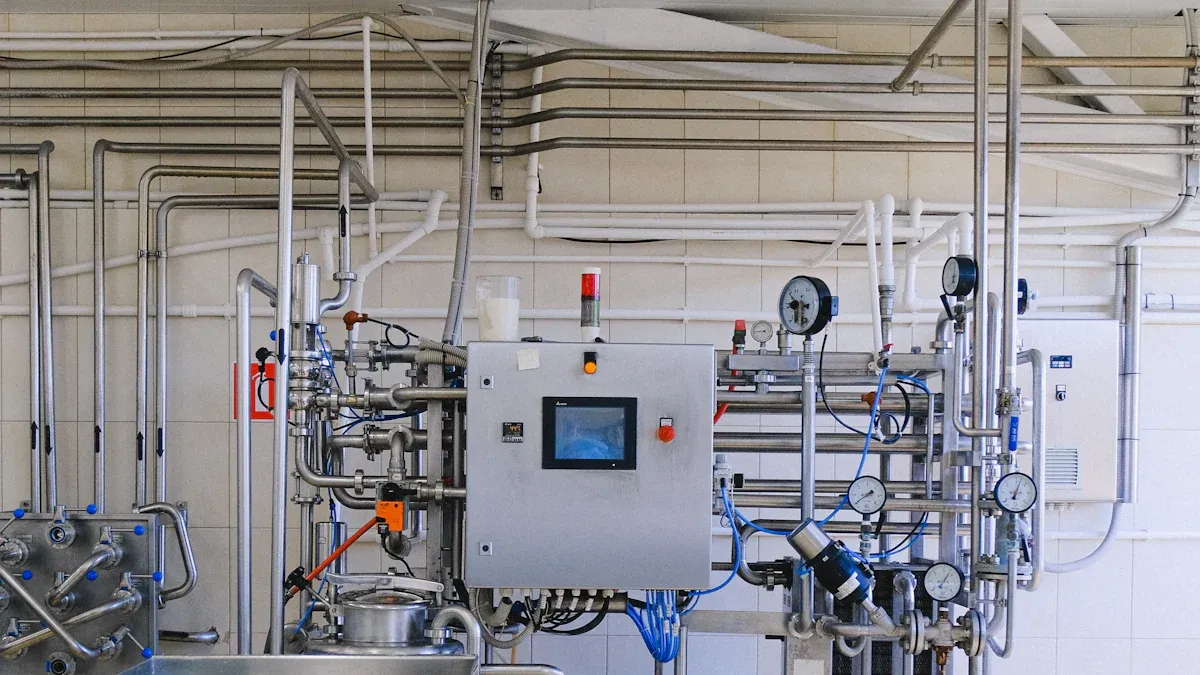
A 2 Ways Solenoid Valve plays a crucial role in many systems. It helps manage the movement of liquids and gases. Think of it as a simple gate that opens or closes to let fluid pass or stop it. This makes it perfect for basic fluid transfer and shut-off tasks across various industries.
For example, manufacturers use these valves to control hydraulic operations and manage air pressure in their machinery. You will find them in manufacturing companies and chemical processing plants. Oil refineries also rely on them. They are essential in the automobile industry, where they manage fuel supply and are part of vehicle starting systems. In the refrigeration industry, they control refrigerant flow for cooling and heating.
Beyond heavy industry, these valves appear in many everyday applications. They are in hot drinks dispensers and coffee machines, making sure you get your beverage. Car washing systems, floor washing machines, and even hydro saunas use them to control water flow. You can also find them in specialized equipment like blood analysis instruments and dentist’s chairs. They even form part of locking systems in offices, hotels, and vending machines.
Irrigation and Watering System Control
Farmers and gardeners often use 2-way solenoid valves to manage water. These valves are key to modern irrigation and watering systems. They help automate the process, making it much easier to care for plants.
These valves offer many benefits. They help reduce water consumption. You can program them to release only the necessary amount of water. This prevents overuse and saves money. It also supports sustainable irrigation practices. Users gain greater control over irrigation cycles. They can set precise opening and closing times. This is perfect for sensitive crops or specific watering schedules. You can even adjust these cycles based on rainfall, temperature, or soil moisture.
Automating irrigation with these valves means less need for human intervention. The system handles everything, freeing up time, especially for large areas. They also prevent common irrigation errors, like watering too long or forgetting a zone. This precision helps ensure uniform irrigation. Studies show the real impact. Farms in California’s Central Valley reduced water usage by 30% after using solenoid valves. A study in Israel found a 25% increase in crop yield. This happened because the valves ensured optimal soil moisture levels. These examples show how much these valves transform farming. They make irrigation more efficient and productive.
Simple Process Control and Automation
Many automated systems rely on 2-way solenoid valves for simple process control. These valves provide efficient control for various processes. They easily connect with computerized networks for automation. This makes them very flexible. You can control them manually or automatically in automated setups.
Industries use them in hydraulic robotics for vehicle manufacturing and in automatic plants. They help with flow control and precise machine operations. These valves regulate the flow of liquids and gases with great accuracy. This ensures correct flow rates. They also keep system performance consistent, even when conditions change. Their quick action allows for fast adjustments. This helps minimize downtime.
For example, in industrial automation, they control pneumatic and hydraulic systems. They also work with industrial robots, assembly lines, and process control systems. In medical equipment, they manage fluid and gas movement in devices like ventilators. HVAC systems use them to regulate the flow of cooling liquid, water, or steam. This helps control temperature and humidity. They are adaptable for both small and large automated systems. This shows their scalability. They can even connect to the Internet of Things (IoT) for real-time monitoring and remote control. This improves how well operations run.
Dispensing and Dosing of Liquids or Gases
Two-way solenoid valves play a vital role in dispensing and dosing applications. These valves offer precise control over the amount of liquid or gas released. This accuracy is crucial in many industries. For example, they ensure you get the correct volume every time.
Think about commercial settings. Many businesses rely on these valves for various tasks:
- 💧 Water: Coffee machines use them to control water flow from the reservoir to the brewing unit. This ensures your coffee has the right amount of water.
- 🥤 Beverage Ingredients: Large beverage manufacturing plants employ these valves. They control the flow of different liquid ingredients into mixing tanks. This helps create consistent drink formulas.
- 🧼 Cleaning Fluids: Manufacturing plants utilize these valves for system sanitization. They control cleaning fluid delivery to maintain hygiene standards.
These valves allow for automated and repeatable processes. They open for a specific duration, letting a precise amount of fluid pass. This makes them perfect for tasks like filling bottles, adding ingredients, or applying coatings. Their quick response time also helps maintain high production speeds.
Vacuum Control and Isolation
Two-way solenoid valves are also essential for managing vacuum systems. They help create, maintain, and isolate vacuum environments. You use them to control airflow into a vacuum chamber or to seal off a section of a vacuum line.
When selecting a 2-way solenoid valve for vacuum applications, specific requirements come into play:
- Circuit Function (2/2-way): These valves have two ports (inlet and outlet) and two positions (open and closed). They can be normally open or normally closed. People typically use them to control airflow into a vacuum chamber.
- Design Principle (Direct, Semi-direct): Direct and semi-direct solenoid valves work best. They do not need large pressure differences to operate. Some vacuum applications might have enough pressure for indirect valves, but experts generally do not recommend this design.
- O-ring Material: The O-rings must withstand vacuum conditions. Common materials suitable for O-rings in vacuum applications include Nitrile, FFKM, FKM, EDPM, silicone rubbers, and Fluorocarbon.
- Response Time: Direct-acting solenoid valves offer a faster response time. This is often better than semi-direct solenoid valves for quick vacuum changes.
- Leakage Rate: Ultra-high vacuum applications have very strict leakage requirements. High vacuum solenoid valves are available for these needs. Keeping the valve clean is also crucial to prevent any leakage.
Choosing the right valve ensures the integrity of your vacuum system. It prevents unwanted air from entering and maintains the desired vacuum level. This is critical for processes like semiconductor manufacturing, scientific research, and food packaging.
When a 2-Way Solenoid Valve is the Best Choice
Requirements for Single Line On/Off Control
You often need a simple way to start or stop fluid flow. A 2-way solenoid valve is perfect for this job. It works like a basic switch. It either lets fluid pass through or completely blocks it. Think of it as a gate for your fluid line. This valve does not divert flow or mix different fluids. It just controls one single path.
Many systems only need this straightforward control. For example, a water dispenser needs to turn the water on and off. A fuel line in a generator needs to open or close. These tasks do not require complex routing. They just need a clear "on" or "off" state. The 2-way solenoid valve provides this reliability and simplicity. It makes it the best choice for such basic, yet crucial, operations.
Need for Positive Shut-Off or Isolation
Sometimes, you must completely stop fluid from moving. This is called "positive shut-off" or "isolation." A 2-way solenoid valve excels at this critical task. It creates a tight seal when closed. This prevents any fluid from leaking past the valve.
Imagine a system where you need to protect equipment from backflow. Or perhaps you need to isolate a section of a pipeline for maintenance. In these situations, you cannot have even a small drip. The valve must provide a complete barrier. A 2-way solenoid valve offers this dependable isolation. It ensures safety and prevents contamination. Its design focuses on creating a secure, leak-free closure. This makes it ideal for applications where absolute stoppage is non-negotiable.
Non-Diverting Flow Path Scenarios
Many systems have a single, direct path for fluid. They do not need to split the flow or combine different streams. For these "non-diverting flow path" scenarios, a 2-way solenoid valve is the most efficient option. It has only one inlet and one outlet. This simple design matches systems that just need to move fluid from point A to point B.
Consider a simple filling machine. It takes liquid from a tank and puts it into bottles. The liquid follows one path. It does not need to go anywhere else. A 2-way solenoid valve controls this single flow. It opens to fill the bottle and closes when the bottle is full. This valve avoids the complexity and cost of multi-port valves. It provides exactly what these straightforward systems require: a clear, unobstructed path when open, and a complete block when closed. A 2 Ways Solenoid Valve keeps the system simple and effective.
Systems with Limited Space or Budget
Many projects face tight constraints. Sometimes, space is very limited. Other times, the budget is small. A 2-way solenoid valve often becomes the perfect solution in these situations. Its design is inherently compact. This makes it an excellent choice for systems where every inch matters.
Think about its structure. A 2-way solenoid valve typically has a simple body. It features just two ports. This minimal design avoids the bulk of valves with more complex flow paths. It does not need extra plumbing for diversion or mixing. This simplicity directly translates into a smaller physical footprint.
This compact nature offers several key benefits:
- Easier Integration: Engineers can easily integrate these valves into existing equipment. They fit well without needing major redesigns.
- Reduced System Size: The overall size of the machine or system shrinks. This is crucial for portable devices or installations in confined spaces.
- Flexible Placement: Installers can place the valve in more locations. This flexibility helps optimize the layout of pipes and other components.
Consider the budget aspect. These valves are generally more affordable than multi-port alternatives. Their simple design also means installation costs are usually lower. You do not need complex piping or control systems for basic on/off functions. Over time, the reduced need for maintenance further contributes to overall cost savings. For applications that only require starting or stopping fluid flow, this valve provides an economical solution.
For example, in medical devices, space is extremely limited. A small 2-way solenoid valve can precisely control fluid delivery without adding bulk. Similarly, in automotive applications, under-the-hood space is always at a premium. These valves provide essential control functions in a tiny package. Even in large industrial setups, a compact valve can simplify manifold designs. It reduces the overall complexity of the piping network. This makes maintenance easier and installation quicker. The small size and low cost of these valves truly make them a versatile component for many industries.
Tip: When designing systems with limited space or a tight budget, always prioritize components that offer simplicity and a compact footprint. A 2-way solenoid valve is often the ideal solution for basic on/off fluid control in such scenarios. It delivers reliable performance without breaking the bank or taking up too much room.
Comparing 2-Way Solenoid Valves with 3-Way Solenoid Valves
You have learned about 2-way solenoid valves. They are great for simple on/off tasks. But sometimes, a system needs more than just stopping or starting flow. This is where 3-way solenoid valves come in. They offer different capabilities.
When Flow Diversion is Required
A 2-way valve has one inlet and one outlet. It simply opens or closes a single path. However, a 3-way solenoid valve works differently. It has three ports. These are often called 'A,' 'B,' and 'Common' or 'C.' This design allows fluid to flow between different combinations of these ports. It can even mix fluids.
| Valve Type | Primary Function |
|---|---|
| 2-Way Valve | On/Off Control |
| 3-Way Valve | Diverting or Mixing Fluids |
A 3-way valve is the better choice when a system needs to mix, divert, or switch fluid paths. It gives you more control and flexibility. For example, a 3-way valve can mix fluids from two inlets into one outlet. It can also send fluid from one inlet to one of two different outlets. Think about crop spraying. Farmers use these valves to direct pesticides or fertilizers. They send the fluid to the right place or mix different solutions. Internally, a 3-way valve uses a disc or plug that moves to manage flow. It has multiple seats for each port. This internal mechanism is more complex because it handles multiple flow paths.
Control of Single-Acting Actuators
Many systems use actuators to create movement. A single-acting pneumatic actuator moves in one direction using air pressure. A spring brings it back to its original position. A 3-way solenoid valve is perfect for controlling these actuators. It either sends compressed air to the actuator's air chamber or vents that chamber to the atmosphere. This action makes the cylinder move.
Pressure Release and Exhaust Needs
A 3-way solenoid valve also handles pressure release and exhaust. It can vent pressure from a system when needed. This is a key difference from a 2-way valve. A 2-way valve only opens or closes a line. It does not have a way to release pressure directly. This exhaust function makes 3-way valves useful in pneumatic systems. They can quickly release air pressure from a cylinder or line. This helps ensure safe and controlled operation.
Comparing 2-Way Solenoid Valves with 5-Way Solenoid Valves
You have learned about 2-way solenoid valves. They are great for simple on/off tasks. But sometimes, a system needs much more control. This is especially true in pneumatic systems. Here, 5-way solenoid valves offer advanced capabilities. They handle complex movements and multiple functions.
Control of Double-Acting Cylinders
A 5-way solenoid valve is essential for controlling double-acting cylinders. These cylinders move in two directions. They need air pressure to extend and air pressure to retract. A 2-way valve cannot do this. It only opens or closes one path. A 5-way valve, however, directs air to one side of the piston while exhausting air from the other. Then, it reverses this action to move the piston back.
Many users find these valves very effective. Nilesh, a user, shared his experience:
I got three of them that I use for pneumatic control of Double Acting Air Cylinder. Nice little valves with precision threads. They work great on 12v. Great product.
This feedback shows how well 5-way valves perform in real-world applications. They provide the precise control needed for these cylinders.
Complex Pneumatic System Requirements
Complex pneumatic systems often demand more than simple on/off control. They might need to sequence operations, interlock movements, or control the speed of actuators. A 5-way solenoid valve handles these intricate tasks. It manages multiple air paths simultaneously. This allows for sophisticated control logic. For example, it can ensure one action completes before another begins. This level of control is vital in automated manufacturing lines. It also helps in robotics where precise movements are critical.
Multiple Port Functionality for Advanced Control
The key difference lies in the number of ports. A 5-way solenoid valve has five ports. This gives it much more functionality than a 2-way valve.
Let's look at the port configurations:
| Valve Type | Number of Ports | Port Designations (Numbers) | Port Designations (Letters) |
|---|---|---|---|
| 5-Way | 5 | Supply air port (1), Outlet ports (2, 4), Exhaust ports (3, 5) | Supply air port (P), Outlet ports (A, B), Exhaust ports (EA, EB) |
| 2-Way | 2 | Inlet port “A”, Outlet port “AB” | N/A |
The 5-way valve has a supply port, two outlet ports, and two exhaust ports. This setup allows it to direct pressurized air to two different outlets. It also exhausts air from two different paths. This multi-port design enables advanced control. You can control the speed of a cylinder by restricting the exhaust flow. You can also achieve precise positioning. This makes 5-way valves indispensable for complex pneumatic automation.
Critical Factors for Selecting a 2-Way Solenoid Valve
Choosing the right 2-way solenoid valve for your system involves careful thought. Several key factors ensure the valve performs reliably and efficiently. You need to match the valve's specifications to your application's exact needs.
Fluid Compatibility and Operating Conditions
The type of fluid you control greatly impacts valve selection. The valve's materials must get along with the fluid. For example, the housing material depends on the fluid's chemical properties and temperature. Brass valves work well for neutral liquids. Stainless steel valves offer better resistance to chemicals, high temperatures, and pressure. The plunger and spring also touch the fluid, so they need compatible materials too.
Solenoid valves handle various fluids like water, air, gas, oil, and steam. However, the body and seals determine compatibility. Common seal materials include NBR, EPDM, and FKM. For water, most brass or stainless steel valves work. Stainless steel is better for water with impurities like chlorine. Air is generally non-corrosive, so most valves work. For oil, seals must resist degradation; nitrile rubber is a common choice. Aggressive chemicals often need high-performance materials like PTFE-lined stainless steel.
Pressure and Temperature Ratings
Every valve has limits for pressure and temperature. You must choose a valve that handles your system's maximum pressure and temperature. Standard solenoid valves typically operate between -20°C to 80°C (-4°F to 176°F). High-temperature valves can work up to 200°C (392°F) or even higher, perfect for steam systems. Low-temperature valves can handle environments as cold as -50°C (-58°F), useful in refrigeration. Some high-pressure valves, like the SV-3321, manage up to 1450 psi (100 bar) and process temperatures from -23°C to 182°C (-10°F to 360°F).
Required Flow Rate and Orifice Size
The valve's orifice is the opening where fluid passes. Its size directly affects how much fluid flows through. A larger orifice allows higher flow rates. Smaller orifices restrict or meter the flow. This principle is crucial for solenoid valves. The magnetic force needed to open the valve must overcome fluid pressure. A smaller orifice needs less force, allowing for more compact valve designs.
Consider these points:
- Flow Rate: Larger orifices mean higher flow. Smaller orifices limit the flow.
- Pressure Drop: Smaller orifices create more resistance and larger pressure drops. Larger orifices result in less pressure drop.
- Fluid Velocity: Smaller orifices increase fluid speed. This can cause turbulence.
Electrical Specifications and Power Consumption
Choosing the right 2-way solenoid valve means looking at its electrical needs. The valve's coil needs a specific voltage to work. You must match this voltage to your system's power supply. Common voltage ranges include 24-120V AC/DC, 100-240V AC/DC, and 12-24V DC.
Power consumption also matters. It affects your system's energy use. DC versions of these valves typically use about 1.0 watt. AC/DC versions usually consume around 1.5 watts. These figures help you calculate the total power needed for your setup.
Supervisory current compatibility is another important detail. This refers to the minimum current needed to keep the valve energized. For 12-24V DC valves, the drop-out current is about 20mA. For 24-120V AC/DC valves, it is around 15mA. Valves operating on 100-240V AC/DC have a drop-out current of about 7mA. Understanding these numbers helps ensure your valve stays open or closed as intended.
| Characteristic | Specification |
|---|---|
| Voltage Ranges | 24-120V AC/DC, 100-240V AC/DC, 12-24V DC |
| Power Consumption (DC version) | 1.0 watt |
| Power Consumption (AC/DC versions) | 1.5 watts |
| Supervisory Current Compatibility (Drop-out current for 12-24V DC) | 20mA |
| Supervisory Current Compatibility (Drop-out current for 24-120V AC/DC) | 15mA |
| Supervisory Current Compatibility (Drop-out current for 100-240V AC/DC) | 7mA |
Material Construction for Durability
The materials used to build a 2-way solenoid valve greatly affect its lifespan and performance. The valve body, seals, and internal components must withstand the fluid they control and the environment. Choosing the right material prevents corrosion and ensures long-term reliability.
Stainless steel is a popular choice for many applications. It offers several advantages:
- It provides improved chemical resistance compared to brass. Specifically, 316 stainless steel resists corrosive chemicals, acids, chlorides, and solvents very well. This makes it perfect for the chemical industry and for aggressive cleaning in food, beverage, and pharmaceutical equipment.
- Stainless steel is compatible with de-ionized water and pure water. Its excellent corrosion resistance helps preserve water purity in medical, laboratory, pharmaceutical, and biotechnology uses.
- It resists corrosion from aggressive media, including harsh fluids and high-pressure media. AISI316 and AISI304/303 Stainless Steel valves are standard in sectors handling such media and operating in tough environments.
- Features like silver shading rings (instead of copper) further enhance suitability with aggressive media. These rings resist harsh acids and alkali better. Seamless armature tubes also offer more protection against corrosion from aggressive media.
Always consider the fluid's properties and the operating environment when selecting valve materials. This ensures the valve lasts and performs well.
The 2-Way Solenoid Valve stands out as the top choice for simple on/off fluid control. Its inherent simplicity and reliability make it a go-to solution. This valve offers cost-effectiveness and efficiency, fitting many applications where you just need to start or stop flow. Understanding its specific role and limitations, especially when compared to 3-way and 5-way valves, helps create the best system design.
Always match the valve type to your exact control needs. This ensures efficiency, performance, and long-lasting operation.
FAQ
What is the main purpose of a 2-way solenoid valve?
A 2-way solenoid valve controls fluid flow in a single line. It simply opens or closes the path. This makes it perfect for basic on/off tasks. It does not divert or mix fluids.
What is the difference between normally open and normally closed 2-way valves?
A normally closed valve stays shut without power. It opens when energized. A normally open valve stays open without power. It closes when energized. People choose based on what happens if power fails.
Can a 2-way solenoid valve control a double-acting cylinder?
No, a 2-way solenoid valve cannot control a double-acting cylinder. These cylinders need air pressure to extend and retract. A 2-way valve only opens or closes one path. A 5-way valve is necessary for this control.
Why should someone choose a 2-way solenoid valve instead of a 3-way valve?
People choose a 2-way valve for simple on/off control of a single fluid path. It is more cost-effective and simpler. A 3-way valve is for diverting, mixing, or releasing pressure.
What materials are best for 2-way solenoid valves handling corrosive fluids?
For corrosive fluids, stainless steel is often the best choice. Specifically, 316 stainless steel offers excellent resistance to chemicals and acids. PTFE-lined stainless steel also works well. The seals must also be compatible.